What a security deposit is and how it’s held
A security deposit is money held to cover potential unpaid charges when a horse leaves a facility. Here’s how it’s held, applied, and returned.
A security deposit is money held to cover potential unpaid charges when a horse leaves a facility - for example, an outstanding board invoice or documented damage. It is not a payment for services. It’s held on your behalf and returned to you unless there’s a valid reason to apply part or all of it.
Key points
- Your deposit is your money. It stays associated with you and your horse until there’s an actual amount owed that it can be applied against - most commonly at move-out, or toward a specific outstanding invoice.
- A facility cannot spend your deposit at will. It can only be applied against actual outstanding charges, and you’ll see a record on the affected invoice when that happens.
- Until then, the deposit sits untouched and is returned in full when you leave, assuming nothing is owed.
How you’ll pay it
When a facility requires a deposit, you’ll receive it as its own invoice by email and to your Stables profile - separate from your other charges. You pay it the same way you pay any invoice, by bank transfer (ACH) or card. See Paying a deposit for the steps.
Where you can see it
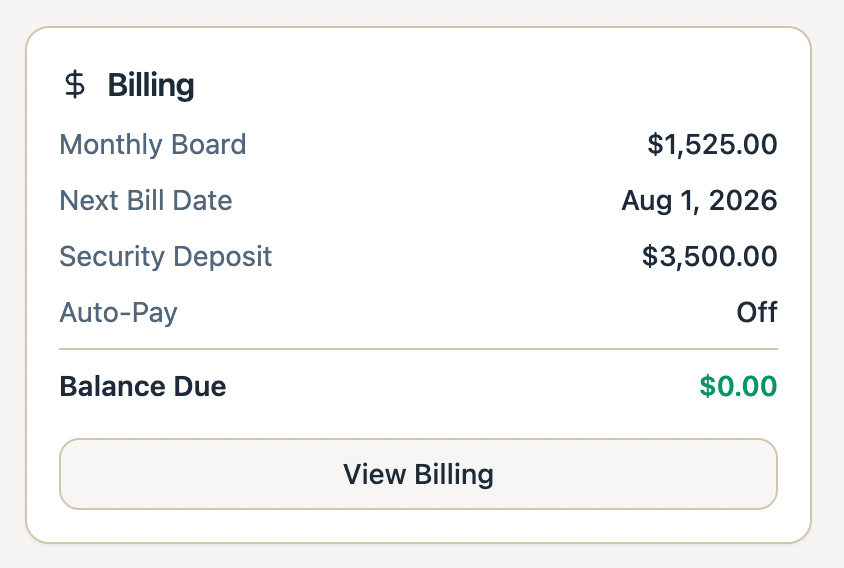
Once paid, the amount held appears on your horse’s details page under Security Deposit. While the payment is still completing, the amount shows with a “(Pending)” note. Your deposit also stays visible in your Billing tab as a paid invoice.
If you ever have a question about your deposit or a charge against it, see Disputes and questions about a deposit.