
Riding Lesson Packages and No-Show Fees: The Billing Policy That Actually Collects
Riding lesson packages and no-show fees only work as a system if both are written down, priced deliberately, and enforced the same way every time. Most boarding facilities running lesson programs lose revenue not because clients are dishonest, but because the policy was never clear enough to enforce, even with solid barn management software in place.
By The Stables Team
What a Riding Lesson Package Should Include and Cost
A riding lesson package is more than a bundle of ride times. It should state, in writing, how many lessons are included, how long each runs, the type of instruction bought (private, semi-private, or group), and what happens if a lesson is missed. Leave that last piece out and every no-show becomes a negotiation instead of a policy decision.
How Many Riding Lessons Should Come in a Package?
Most programs land somewhere between 4 and 10 riding lessons per package. Smaller packages are easier for new clients to commit to; larger packages reward committed riders with a lower per-lesson rate but tie up more instructor time and horse availability if a client's schedule shifts mid-package. Whatever the size, print the lesson count, the expiration window, and the no-show terms on the same document the client signs.
Pricing a Riding Lesson Package to Cover Your Costs
Package pricing has to account for more than instructor time: arena or ring use, horse wear, tack, and the administrative time it takes to schedule, invoice, and collect payment all belong in the number. A common mistake is discounting a package so heavily to win the sale that one no-show, refund, or makeup lesson wipes out the margin. Set the price first, then decide the discount, rather than picking a round number and working backward from it.
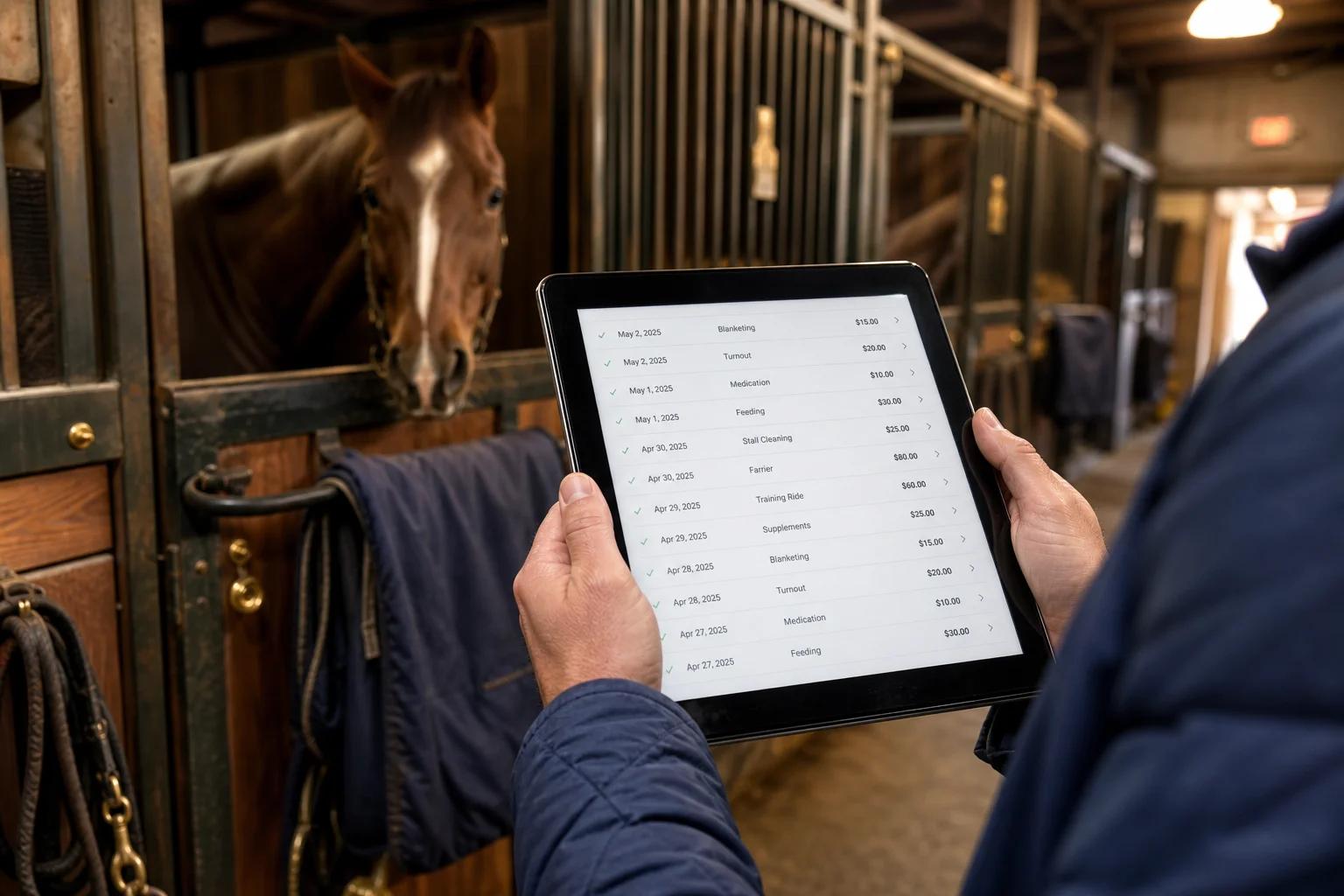
Riding Lesson Packages and No-Show Fees: Setting a Policy That Holds Up
A policy on riding lesson packages and no-show fees has to answer three questions before a client ever misses a lesson: what counts as a no-show, what it costs, and how much notice the barn requires. Vague language ("please try to give notice") is exactly why fees don't get collected, there's nothing specific to point to when a client pushes back.
What Is a Fair No-Show Fee for a Missed Riding Lesson?
A fee meaningful enough to change behavior, but not so steep it reads as punitive, tends to work best. Many facilities charge between half and the full price of the missed lesson, since the instructor's time and horse's availability were already committed regardless. The fee should reflect what the barn actually loses, not function as an added penalty.
No-Show Fee vs. Late Cancellation Fee: What's the Difference?
A no-show is when a client doesn't cancel at all, the instructor and horse are ready, and the slot goes unused with zero warning. A late cancellation is when the client cancels just after the notice window closes. Most barns charge the full lesson rate for a true no-show and a reduced rate, often half price, for a late cancellation, since some warning still lets the barn try to fill the slot.
How Much Notice Should You Require Before a Riding Lesson Cancellation?
A 24-hour notice window is common for private lessons, giving the barn time to offer the slot to another rider or reschedule staff; some facilities extend that to 48 hours for group lessons or clinics that depend on a minimum headcount. Apply the window the same way every time: a policy enforced for some clients and waived for others isn't a policy, it's a source of resentment among the clients who followed the rules.
Should Weather-Related or Barn-Closure Cancellations Still Incur a Fee?
Generally, no. If the facility closes the arena, cancels lessons for safety, or a storm makes the property unsafe to reach, that's the barn's call, not the client's, and shouldn't cost the client anything. Most facilities reschedule at no charge or issue a lesson credit. Spell out this exception in the same document as the no-show policy, so it reads as a defined carve-out rather than a loophole.
!Riding instructor reviewing a lesson package schedule and payment ledger at a barn front desk
Collecting the Fee Without a Fight or a Lost Client
Writing the policy is the easy part; collecting on it without souring the relationship is where most barns actually struggle, and it's a big reason no-show fees turn into missed charges instead of collected revenue.
Can You Charge a No-Show Fee Without a Card on File?
Only with difficulty. Without a saved payment method, a no-show fee becomes a separate invoice the barn has to chase down, and unpaid invoices for missed lessons are a common form of revenue leakage. Requiring a card on file at enrollment, the same way many facilities already handle board billing, turns the fee into a routine charge instead of an awkward conversation at the front desk.
The practical fix is built into how the package is sold in the first place: collect payment information up front, disclose the no-show policy in writing before the first lesson, and use autopay or online payments so the fee gets charged the same way every time. If it helps to see what a full lesson program is actually worth once no-shows stop leaking revenue, running the numbers through a barn profit calculator makes the case for stricter enforcement easier to make to both staff and clients.
Package Expiration, Unused Credits, and Refunds
Should Riding Lesson Packages Expire?
Yes, in most cases. An expiration window, commonly 60 to 90 days from purchase, keeps a package moving instead of sitting open while the barn reserves instructor time for a client who may never return. Print the expiration date on the package itself and remind the client as it approaches, rather than letting it lapse silently.
What Happens to Unused Riding Lesson Credits?
Policies vary, but a fair middle ground is a short grace period, often around 30 days, to use remaining credits or convert them to a different lesson type before they expire. Letting credits roll over indefinitely creates a growing liability that's hard to track; letting them vanish without warning creates the client-trust problem this whole policy is meant to avoid.
Do Unused Riding Lesson Packages Ever Get Refunded?
Usually only partially, and only under specific circumstances, such as a documented injury, a move, or the barn ending the lesson program. A common approach is refunding the prorated value of unused lessons, minus any discount the client received for buying in bulk, rather than a full refund at the original per-lesson rate. Write the rule down before the first package is sold so a refund request never becomes a case-by-case call made under pressure.
Writing a No-Show Policy Riding Lesson Clients Actually Read
A policy nobody reads doesn't collect anything. Keep it short enough to fit on one page: what counts as a no-show, the fee amount, the notice window, the weather exception, and how the fee gets charged. Put it in the same document the client signs when buying the package, not a separate terms page they'll never open. Getting this down on paper in one place is what turns a good intention into a policy clients actually follow.
Say it out loud too: a staff member reviewing the policy verbally at enrollment, in addition to the client signing it, catches most confusion before it becomes a dispute. Enforce it the same way for every client, every time, since one unexplained exception turns the policy into a suggestion, and collected revenue back into missed charges.
Frequently Asked Questions
Is charging a no-show fee for riding lessons standard practice?
Yes. Charging a fee for a missed lesson with no notice is common across boarding facilities and independent instructors, since the instructor's time and horse's availability are committed regardless. The amount and structure vary by facility, but the practice is widely accepted.
Should a first missed lesson be treated differently from a repeat no-show?
Some facilities build in a one-time grace period for a first missed lesson, especially for new clients still learning the system, then apply the full fee to any repeat no-show. This isn't required, but it can soften the relationship early without weakening the policy for repeat offenders.
What if a client has a medical or family emergency?
Most written policies leave room for facility discretion in genuine emergencies, separate from the standard notice window. Documenting exceptions as they happen, rather than deciding informally, keeps the policy consistent and gives staff something to point to if the same client asks again.
Can group riding lesson packages use the same no-show policy as private lessons?
The core structure can carry over, but group lessons often need a longer notice window, since one open spot affects the whole class, not just one rider. Some facilities also charge a smaller fee for a group no-show, since the lesson still runs for the other participants.
Do online payments and autopay reduce no-show disputes?
They tend to, mainly because the fee gets charged automatically and consistently rather than requested by staff after the fact. When a client already has a card on file and knew the policy going in, the charge reads as routine billing instead of a confrontation, which is what makes a policy collectible instead of theoretical.
See How Stables Connects Care to Billing
A no-show policy is only as good as the system behind it, from the signed package agreement to the card on file to the charge itself. See how Stables features connect lesson scheduling, invoicing, and online payment collection into one workflow built to get boarding facilities and lesson programs paid.