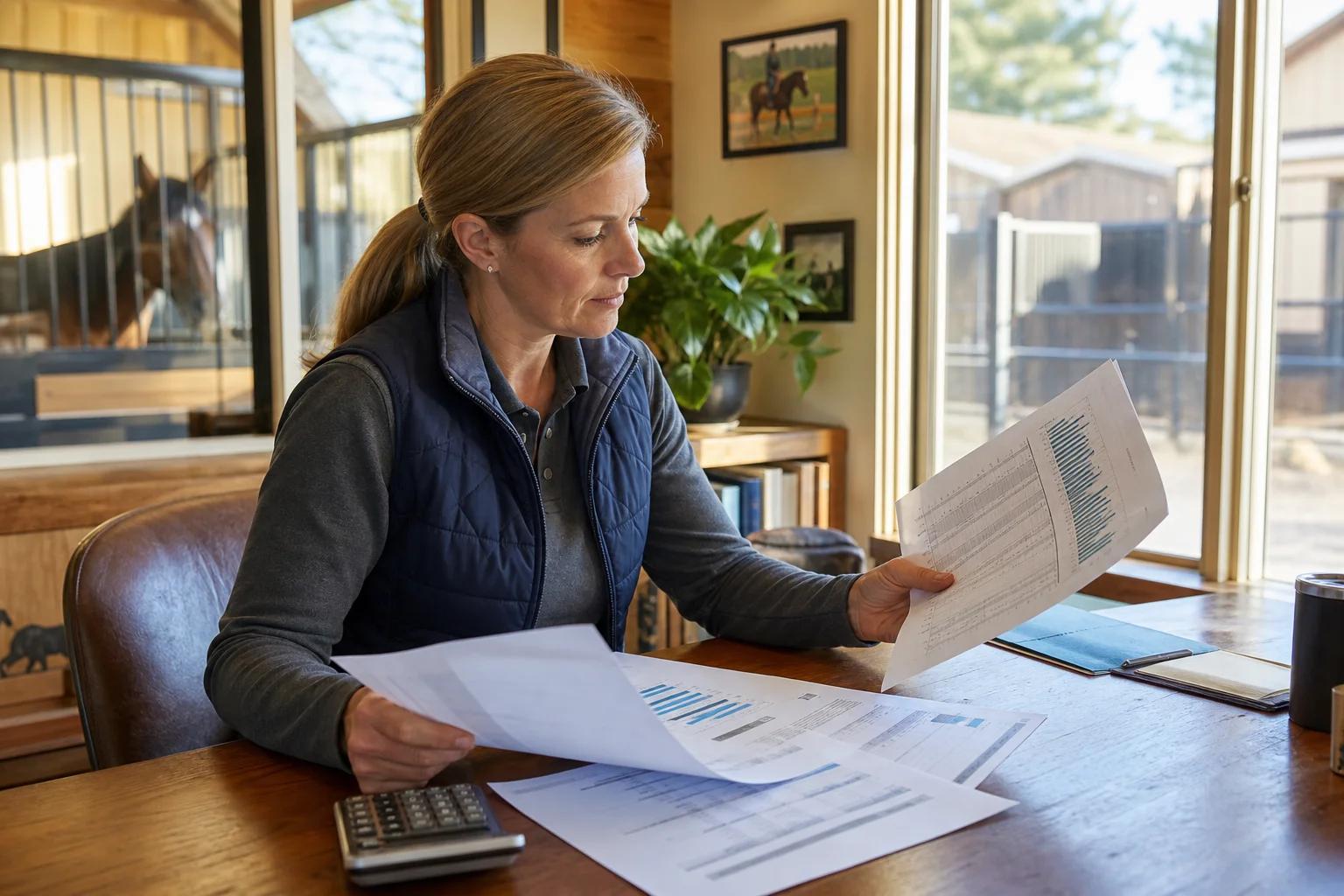
How to Raise Board Rates Without Losing Boarders
Raising board rates without losing boarders comes down to timing, communication, and operational proof. Boarders who receive clean invoices, accurate care records, and proactive updates are far more likely to accept a rate change than those kept in the dark. The right barn management software builds that operational credibility before the conversation starts.
Why Board Rates Fall Behind Operating Costs
Most boarding barns have not raised rates in two or three years. Not because costs stayed flat, but because the conversation feels risky. Feed, bedding, farrier access, and labor have all increased, yet many barn operators absorb the added cost rather than pass it on, quietly losing money on every stall they fill.
The result is a facility running on compressed margins, with boarders who have no visibility into what their monthly payment actually covers. If horse owners do not understand what they are paying for, they have no reference point when a rate increase arrives. It comes across as arbitrary instead of justified.
This is the core problem: barn operators who do not document daily care, do not send consistent invoices, and do not communicate proactively have nothing to show boarders when rates need to rise. The increase lands cold, and boarders start shopping.
The Real Cost of Keeping Rates Flat
Before building a communication plan, do the math. A boarding barn holding rates flat for two years while hay and grain costs have risen 12 to 18 percent is losing money on each occupied stall. USDA Agricultural Prices reports published between 2022 and 2024 documented consistent year-over-year feed cost increases that most horse boarding operators have not offset with corresponding rate adjustments.
Here is a specific example: if your barn holds 20 stalls at $600 per month and your per-stall cost has risen by $40 in feed and bedding alone over three years, that is $800 per month in costs you are not collecting. Over a year, that means $9,600 in revenue leakage from a single cost line. The real cash leaving your property each year is the difference between what care actually costs and what your fixed rate collects.
The goal of raising rates is not to extract more money from boarders. It is to bring your pricing in line with what it actually costs to provide safe, attentive horse boarding. Framing the increase that way changes how boarders receive it.
Use the barn profit calculator to model a rate adjustment against your current occupancy and cost structure before sending any notice to boarders.
How to Raise Board Rates Without Losing Boarders: The Communication Plan
How you communicate a rate increase matters as much as the number itself. Most problems come from poor timing or vague language, not from the increase being unreasonable.
Announce Early, Not at Billing
Give boarders at least 60 days of notice before the new rate takes effect. Sixty days is the standard that most boarding agreements require. Ninety days is better for increases above 10 percent. Written notice creates a record for both parties and reduces disputes when the new rate takes effect.
Name the Reasons Without Burying Them
Vague notices that say "due to rising costs" invite questions and suspicion. Specific ones invite acceptance. If hay costs increased 15 percent and your maintenance budget rose because of property upkeep and equipment repair, say so. Boarders who understand the reasons behind a rate change are more likely to absorb it without attrition.
Show What the Rate Covers
Attach something real. A summary of care hours per horse, turnout frequency, vet coordination, or maintenance completed on the barn property this year gives the rate increase evidence behind it. Owners paying for services they can see and verify behave differently from those paying into a black box.
Offer a Channel for Questions
Let boarders respond directly, through a scheduled call, a barn walkthrough, or a reply to the notice. Horse owners who feel heard during a rate change are more likely to stay. Those who feel managed are more likely to shop around. Handling this well requires attention to both the initial message and the follow-up.
What Operational Proof Looks Like Before a Rate Increase
The boarders most likely to accept a rate increase are the ones who already trust how the facility works. That trust is built long before the notice goes out.
A barn that tracks daily care, sends accurate invoices, captures add-on charges for things like extra blanketing and farrier coordination services, and gives owners access to their account balance through an owner portal has a natural advantage. When a rate increase arrives from that facility, boarders have context. The barn has demonstrated what it handles, and the rate increase becomes a business conversation instead of a surprise.
Facilities operating on manual tracking, inconsistent invoicing, and verbal communication have a harder time. The rate increase becomes the moment boarders start questioning whether the barn is worth it, because there is no operational record to point to.
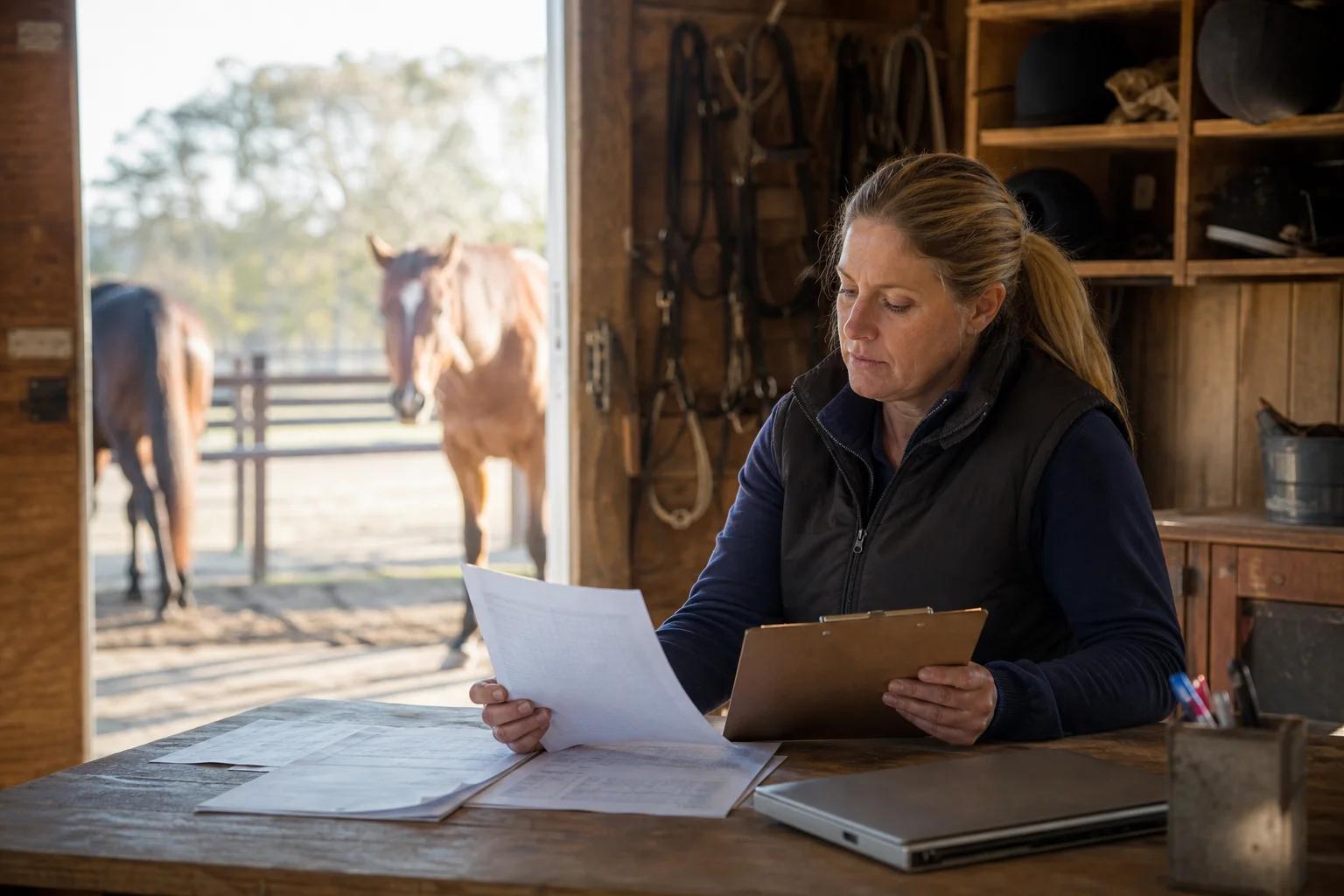
Recurring billing, itemized invoices, and add-on charge capture reduce revenue leakage and improve how boarders perceive the value they are receiving. That perception matters directly when it comes time to raise rates.
Building the Foundation Before You Build Your Rate Increase
If your barn is absorbing rising costs without collecting for them, the gap between what operations cost and what you are bringing in grows wider every billing cycle. The fix requires two things: accurate cost accounting and a way to demonstrate that value to boarders before the rate conversation starts.
That means documenting daily care. It means sending consistent invoices with itemized charges. It means offering boarders a real view of their account balance, payment history, and the specific services their horse received. It means making payments easy so late balances do not accumulate while boarders disengage.
Standard practice in well-run facilities treats care and billing as connected workflows, not separate problems. When a boarder sees their invoice reflect what actually happened, they are buying into the facility's operational process, not just paying a fixed monthly number.
Frequently Asked Questions
How much should I raise board rates at one time?
Increases of 5 to 12 percent are generally absorbed without meaningful attrition when notice is clear and communication is specific. Increases above 15 percent in a single billing cycle carry higher attrition risk, particularly if boarders have not seen consistent operational transparency from the facility. Phasing a larger increase over two billing cycles often works better than a single large jump.
How much notice should I give boarders before raising board rates?
Sixty days is the practical minimum and the standard most boarding agreements require. Ninety days is better for increases above 10 percent or if your boarders plan on longer timelines. Written notice creates a record for both parties and reduces the chance of disputes when the new rate takes effect.
What if a boarder threatens to leave over a rate increase?
Start with a conversation, not a concession. Ask what specific concern they have: the number, the timing, or something else. Many boarders who signal they will leave are actually negotiating. If your care documentation is solid and the increase is cost-justified, the operational record is on your side. Offer a phased timeline if needed, but do not hold rates flat to retain one boarder at the cost of sustainable margins.
How do I know if my board rate is too low?
Compare your per-stall monthly revenue against your actual per-stall cost, including feed, bedding, labor, maintenance, and insurance for the property. If your margin is below 15 percent of your board rate, you are running thin. Also check what comparable facilities charge for similar care standards in your region. If your rate reflects what a previous operator charged years ago, it likely does not reflect your real current costs.
Can software help with how to raise board rates without losing boarders?
Software does not set your rate, but it builds the operational proof that makes a rate increase defensible. Accurate invoices, itemized add-on charges, automated recurring billing, and an owner portal that shows boarders their account balance and care history all increase trust before a rate change is announced. That operational clarity directly reduces attrition when the notice arrives.
Connect Care to Billing Before Your Next Rate Increase
If your barn is absorbing rising costs without collecting for them, the gap grows every billing cycle. Building the operational trust that keeps boarders through a rate increase starts with connecting care records, billing, and payments in a single workflow. Stables gives boarding barns the tools to track daily care, invoice accurately, collect faster, and give owners the visibility that makes rate increases a business conversation, not a confrontation.