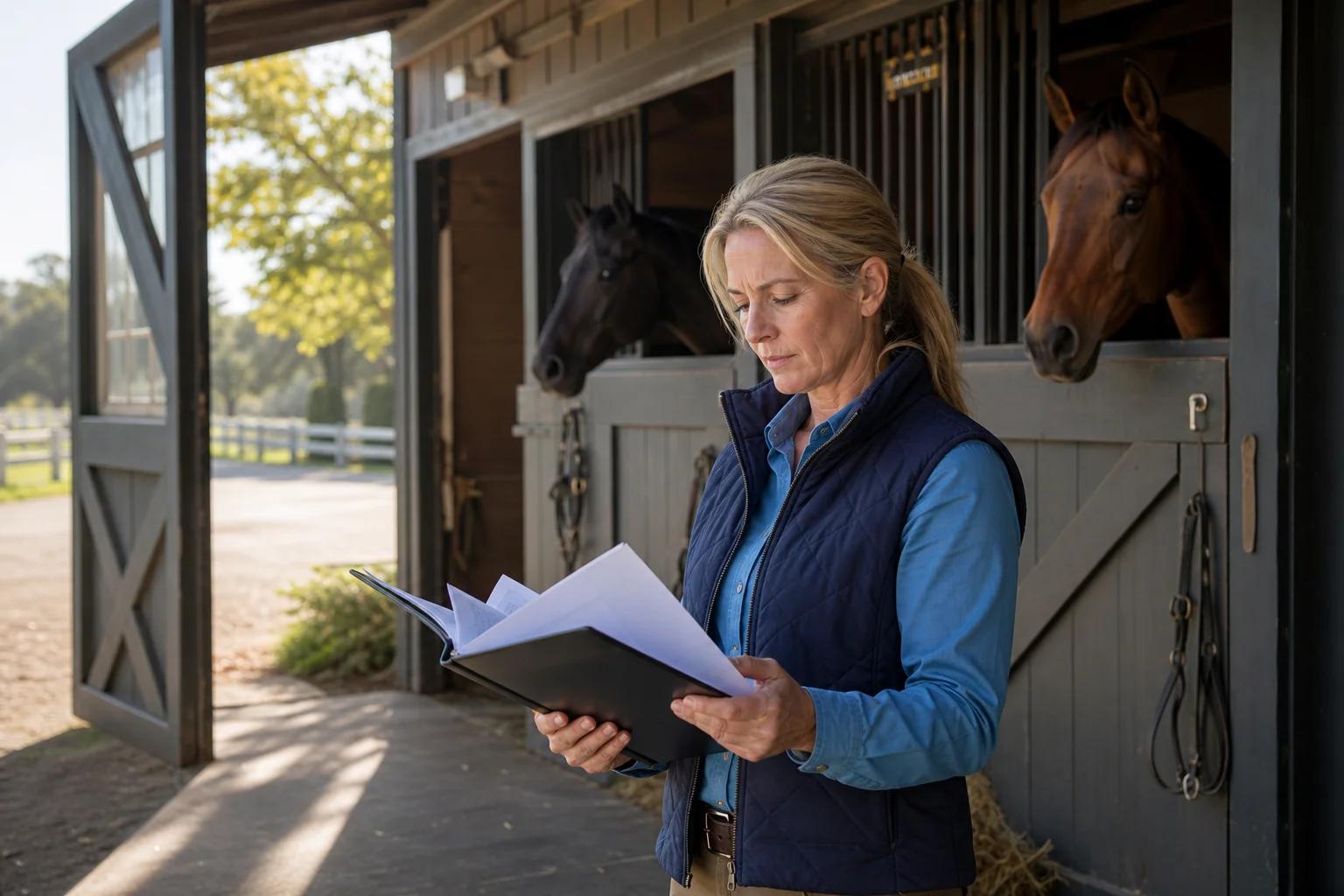
Horse Boarding Insurance and Liability: The Legal Setup Checklist for New Barns
Horse boarding insurance and liability coverage are non-negotiable for any barn accepting horses onto its property. One uncovered incident can generate six-figure claims that end an operation. Whether you manage five stalls or fifty using barn management software, this checklist covers the core policies, boarding contracts, and state law protections every facility owner needs before opening day.
By The Stables Team
Why Horse Boarding Insurance and Liability Requires Specialized Coverage
Horses (Equus ferus caballus) are large, powerful domesticated animals carrying instincts shaped over 55 million years of evolution. The wild horses from which today's horse breeds descend were prey animals that respond to perceived threats with explosive, unpredictable movement. A horse that spooks is not acting aggressively. It is acting exactly as biology shaped it to act.
Whether you board a heavily muscled quarter horse, a versatile morgan horse, or a thoroughbred mare, the average adult horse weighs between 900 and 1,200 pounds, stands 14 to 17 hands tall, and can kick with enough force to cause serious injury. Many of the horse breeds boarded today were developed through selective breeding for physical power and speed. Their breeding history gives them capabilities that make them both valuable and inherently risky as animals to insure.
Horses and humans have worked alongside each other for thousands of years. According to the American Horse Council, there are approximately 7.2 million horses in the United States today. The horses used in boarding operations represent significant economic value, and that value combined with their physical capabilities is why horse boarding insurance and liability coverage cannot be handled with a standard commercial property policy.
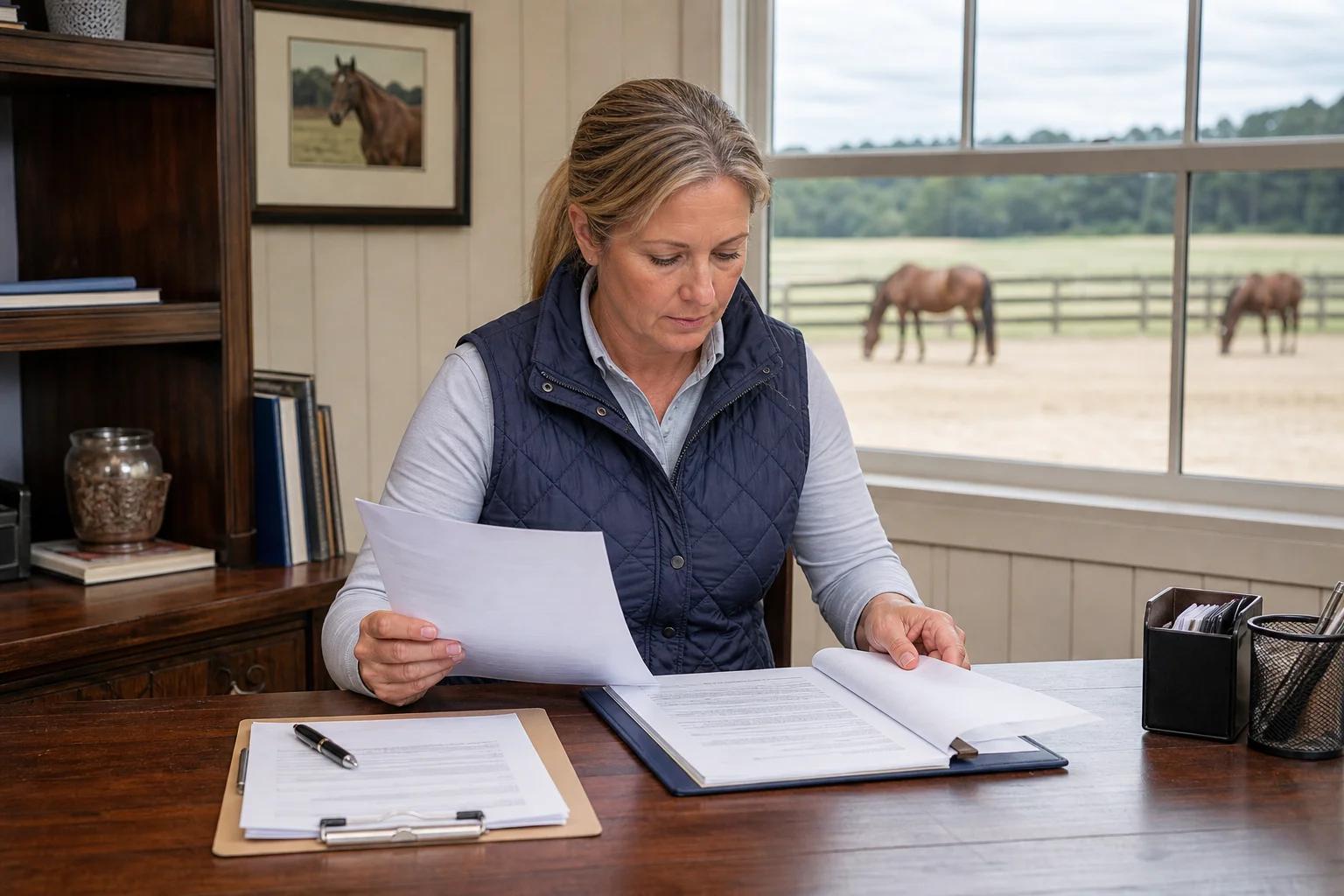
The Four Core Insurance Coverages Every Boarding Barn Must Carry
Before you collect boarding barn insurance quotes from carriers, understand what each coverage type actually does.
General Liability Insurance
General liability covers bodily injury and property damage claims from third parties including boarders, visitors, and vendors. Most equine insurers recommend a minimum of $1 million per occurrence for boarding facilities. Running a barn with heavy daily traffic from horse owners, trainers, and service providers makes this coverage essential from day one.
Care, Custody, and Control (CCC) Insurance
Standard GL policies exclude property in your care, custody, and control. Because horses at your barn are legally in your care as animals, a standard GL policy will not cover a horse injured or killed under your supervision. CCC coverage fills that gap. A feed error, a water failure, or a stall accident that harms a horse leaves you fully exposed without it.
Commercial Property Insurance
Your barn structure, fencing, equipment, and food and hay storage represent serious capital investment. Commercial property insurance covers physical damage from fire, weather, vandalism, and other covered perils, including owned equipment like tractors and spreaders.
Equine Mortality and Major Medical
Boarder-owned horses are typically insured by the horse owners themselves, but your boarding contract should require proof of coverage as a condition of boarding. This protects both parties when a horse of significant breed value is injured in your care.
Equine Activity Liability Acts: Real Protection With Real Limits
Most U.S. states have passed Equine Activity Liability Acts (EALAs), which limit civil liability for equine activity sponsors when participants are injured from inherent risks of working with horses. These laws give boarding barns real protection in the world of equine liability disputes, but they are not blanket immunity.
EALA protections typically apply when the injured party was participating in an equine activity, the injury resulted from an inherent risk such as unpredictable animal behavior, and the facility posted the required warning notices. According to the National Agricultural Law Center at the University of Arkansas School of Law, equine activity liability statutes exist in 48 states, with documented case experience showing that facilities with consistent contracts, posted signage, and verifiable care records fare better in disputes than those relying solely on the statute.
Where EALAs do not protect you: negligent facility maintenance such as broken fencing or inadequate lighting, failure to disclose a known dangerous condition or a specific horse's behavioral history, injuries to non-participants who were not warned, and on-the-job injuries to your own employees (those are workers' compensation claims).
Have an equine attorney review whether your posted notices and contract language satisfy your state's specific statutory requirements. That one-time review determines whether the law actually protects your operation when you need it.
Your Boarding Agreement: The Contract Language That Matters
Your boarding agreement is not a formality. It is the primary legal document that establishes care terms, allocates risk, and determines whether your EALA protections hold. The freedom from liability that equine activity statutes can provide only holds if your documentation supports the claim.
Every boarding contract should cover:
Feed and care specifications. Define what food, supplements, and feeding schedules are included in base board. A dispute about whether a horse received its daily feed should be resolvable with documented records, not competing accounts.
Emergency authorization. Define your authority to approve emergency veterinary care when a horse owner cannot be reached, and establish who bears the cost and up to what amount.
Release of liability language. A signed release that references your state's EALA and names the inherent risks of equine activity is essential. Courts have upheld releases that are specific and clearly communicated. Courts have struck down releases buried in fine print or those that appear to cover the facility's own negligence.
Termination provisions. Define how either party ends the boarding relationship, the required notice period, and what happens if an owner stops paying board.
Use attorney-drafted templates as a starting point, not a finished product. A contract drafted for a facility in another state may not satisfy your state's specific requirements. The source of your legal template matters as much as the document itself.
How Care Records Become Your Legal Defense
Insurance claims and liability disputes come down to documentation. What care was given, by whom, and when? What was the horse's condition before an incident? Were known behavioral issues disclosed?
The barn admin patchwork of handwritten logs, text threads, and spreadsheets that most new barns rely on creates real legal exposure. When your only record of daily care is a notebook a groom kept, you cannot produce timestamped, verifiable evidence of what happened.
Facilities that use horse facility software to track care events, health observations, feeding, and veterinary visits build a structured record trail that holds up in an insurance or legal dispute. Every entry is timestamped. Every care action is logged. When an insurance adjuster asks what happened on the day of an incident, the answer is a documented record, not a recollection. That difference in operational clarity can determine how a claim resolves.
Frequently Asked Questions
Does general liability insurance cover horse-on-horse injuries at my facility?
Not typically. Horse-on-horse injuries fall under the Care, Custody, and Control exclusion in standard GL policies. General liability covers third-party bodily injury and property damage, not animals in your direct care. CCC coverage fills that gap. Review your policy exclusions with an equine insurance specialist before assuming coverage exists for horse-on-horse incidents.
Do I need workers' compensation insurance if I have barn employees?
Yes. Most states require workers' compensation once you hire employees, and equine facilities are not exempt. Grooms, barn managers, and exercise riders are covered employees. An employee injured while handling a horse files a workers' comp claim, not a general liability claim. This is a separate coverage requirement from your equine liability package.
What does horse boarding insurance and liability coverage typically cost for a small barn?
A small boarding barn under 20 horses typically pays between $1,500 and $4,000 per year for a commercial GL policy with equine coverage endorsements. CCC coverage is priced separately based on the aggregate value of horses in your care. Collect quotes from at least three carriers that specialize in equine commercial lines before binding coverage.
Can I require boarders to carry their own horse insurance?
Yes. Your boarding contract can require boarders to carry mortality and major medical insurance on their horses, with annual proof provided to the facility. This protects both parties and reduces disputes over veterinary costs when a horse of significant breed value is involved in an injury or illness event at your facility.
Does a state Equine Activity Liability Act protect me if a minor is injured at the barn?
It depends on the state and circumstances. Most EALAs extend protection to participants in equine activities, and a child handling or riding a horse is typically a participant. Some states treat adults and minors differently, and a parent's signed release may not fully cover claims on behalf of a minor child. Consult an equine attorney in your state for specific guidance.
Build Your Legal Foundation Before the First Horse Arrives
Horse boarding insurance and liability compliance is not a one-time setup task. Coverage should be reviewed annually, contracts updated when state law changes, and care records maintained consistently from day one. The facilities that survive their first incident built this foundation before they needed it.
Stables connects care tracking, billing, and owner communication in one workflow, so the records your operation depends on legally are built into how your barn runs every day. See how the care-to-cash platform turns daily care into the documented trail that protects your business.