Horse Boarding Business Expenses: A Full Cost Breakdown Before You Set Your Rate
Understanding horse boarding business expenses before you set your board rate is the difference between a facility that generates sustainable revenue and one that quietly bleeds cash. From hay and bedding to insurance and labor, every cost category must appear in your financial plan before your pricing makes sense. The barn profit calculator is a useful first checkpoint.
By The Stables Team
What Horse Boarding Business Expenses Actually Include
Most barn owners who undercharge do so for the same reason: they priced their board based on what nearby facilities charge, not on what it actually costs them to operate. Before you can build a sound boarding business plan, you need a clear picture of every expense category your horse boarding facility carries.
Horse boarding business expenses fall into two buckets: fixed costs (those you pay regardless of stall occupancy) and variable costs (those that scale with the number of horses in your care). Both matter, and both need to appear in your financial plan before you name a rate. Treating either as a rough estimate is how boarding operations end up cash-flow negative at steady occupancy.
Fixed Costs: The Floor Beneath Every Stall
Fixed costs are what a boarding facility pays whether it has one horse or fifty. They define the minimum your operation must generate each month before it earns a dollar of margin.
Mortgage or Lease
The largest fixed expense for most facilities is the property itself. Whether you own and carry a mortgage or lease from a landowner, this cost runs every month regardless of stall count. Facilities on purchased land may carry a 20-to-30-year note; those leasing often sign multi-year agreements with annual escalation clauses.
Insurance
A boarding facility needs commercial liability insurance, care, custody, and control coverage for horses in your care, and workers compensation if you have employees. These premiums vary by state, herd size, and claims history, but insurance is consistently one of the fixed costs most underestimated when starting horse boarding.
Property Taxes
Tax assessments on equestrian property vary widely by jurisdiction. Some states offer agricultural exemptions for working horse facilities; others assess at full commercial rates. Know your actual annual tax bill before you build your financial plan.
Utilities
Water, electric, and heating are year-round fixed loads. A single horse drinks 10 to 12 gallons of water per day, a figure that rises in summer and for performance horses in heavy work. Footing maintenance, arena lighting, and well pump operation add to the utility line.
Equipment and Vehicle Maintenance
Tractors, skid steers, muck spreaders, arena graders, and trailers all require recurring maintenance. If you lease equipment, those payments are fixed. If you own, budget a maintenance reserve and a replacement fund. A $35,000 tractor does not last forever, and replacing it without a reserve creates a cash flow crisis mid-season.
Variable Costs: What Changes With Every Horse
Variable expenses shift as your horse census changes. They are the per-horse costs that scale up as stalls fill and down when horses depart.
Hay and Forage
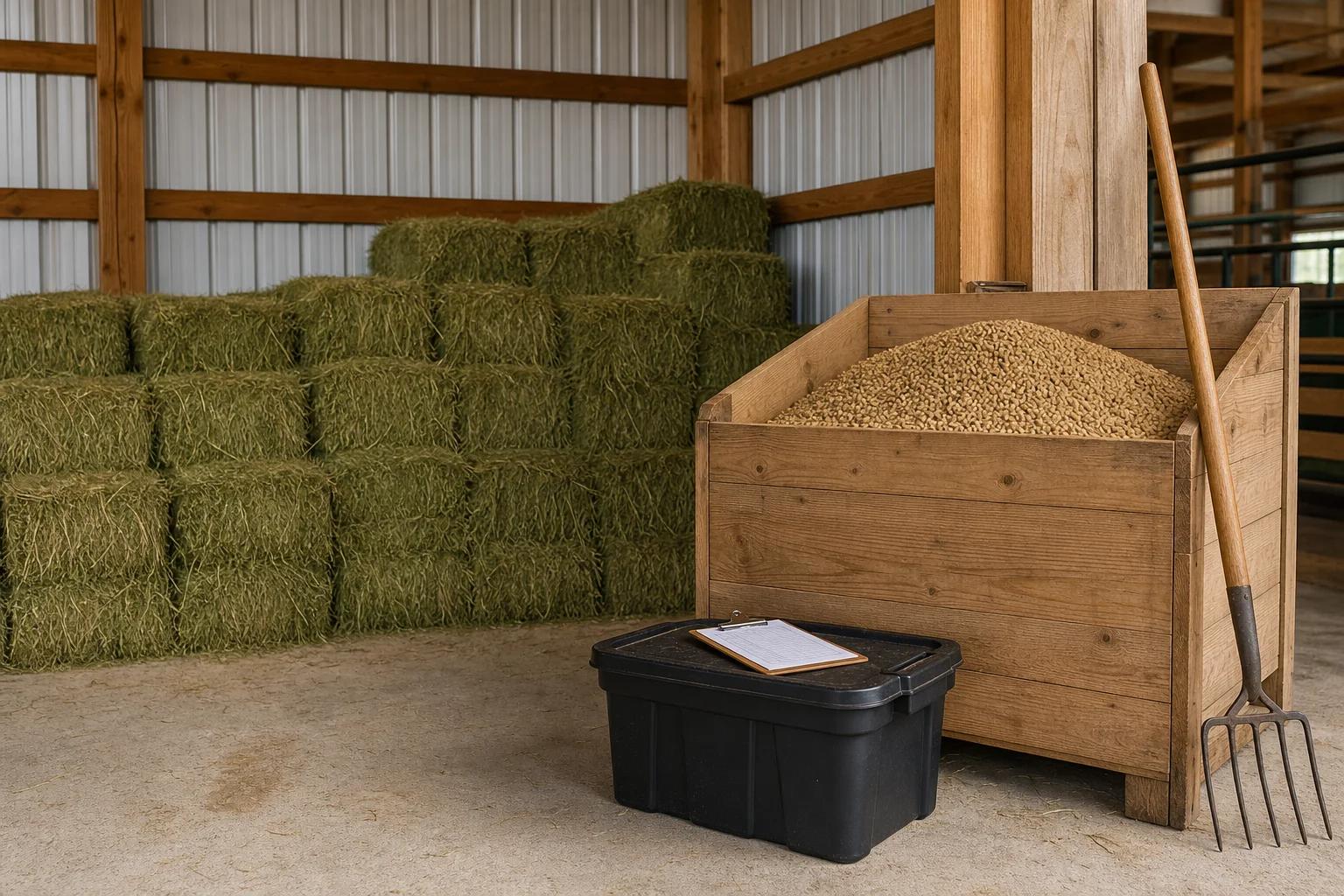
Feeding is typically the largest variable cost in a boarding operation. A 1,200-pound horse at maintenance may consume 20 to 30 pounds of hay daily. Regional drought, supply chain disruptions, and seasonal demand all push hay prices higher, so build a buffer into your per-horse budget before you set your board rate.
Bedding
Stall bedding, whether shavings, straw, or pellets, is a recurring line item that compounds quickly across a full barn. Bedding costs are also sensitive to lumber market conditions, which have shown meaningful volatility in recent years.
Grain and Supplements
Basic board often includes a standard grain ration, but horses with special feeding needs, supplements, or medications drive additional labor and cost. Know what your base board includes and what triggers an add-on charge before you finalize your rate.
Farrier and Veterinary Passthrough Costs
When your base board includes any routine veterinary oversight or farrier scheduling, those costs enter your variable expense column. Many facilities keep these as owner-paid services; others include periodic care as part of a premium board tier. Either way, your financial plan needs to acknowledge what you provide and what the horse owner pays directly.
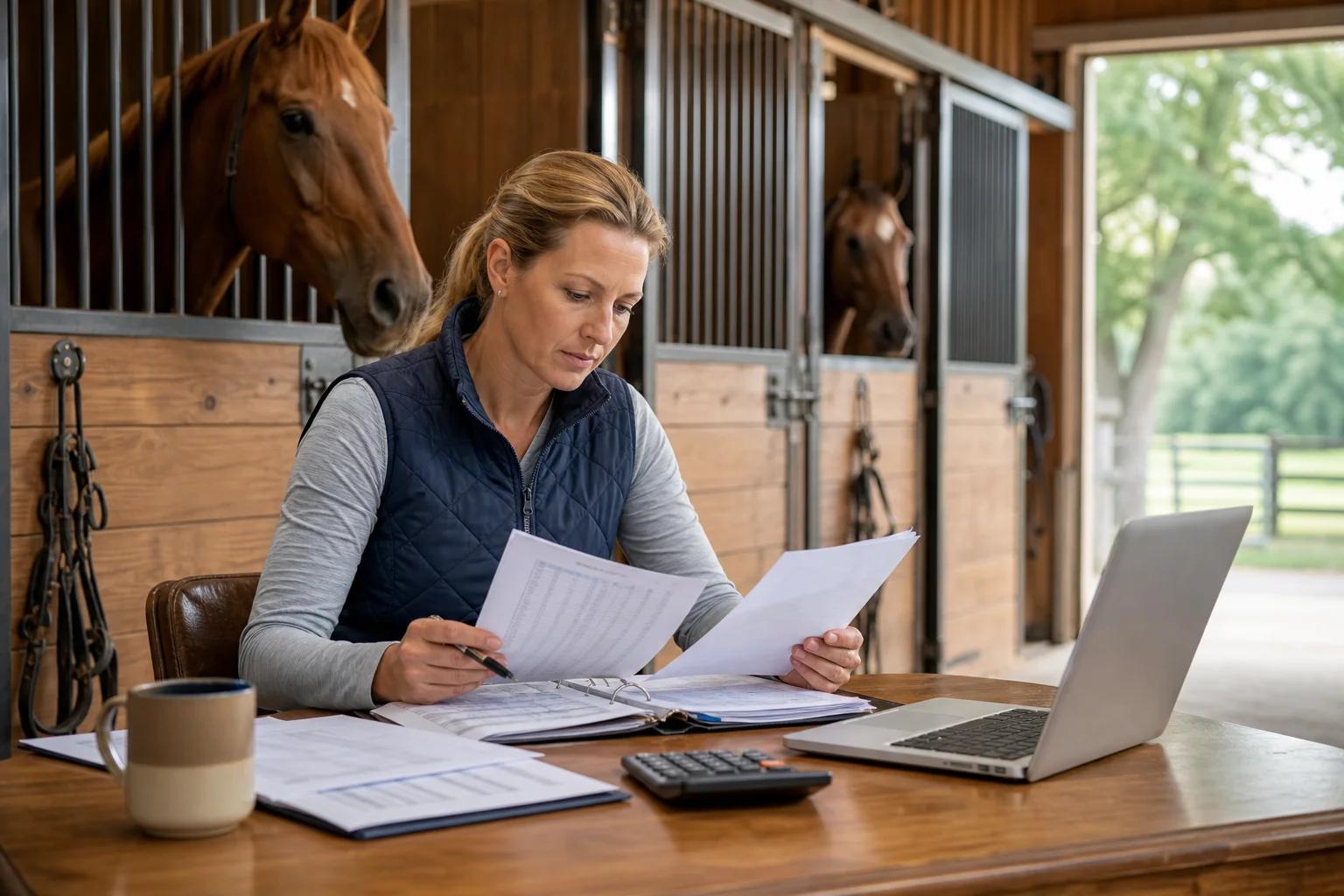
!Barn manager reviewing horse boarding business expenses at a well-organized equestrian facility
Labor: The Line Item Most Often Missing From the Business Plan
Labor is where boarding business plans most commonly fail. Operators price based on feed and bedding, then discover that the hours of care they provide, or pay others to provide, consume a significant share of their margin.
Staff Wages
A full-time barn hand in most U.S. markets earns between $15 and $22 per hour, with experienced managers commanding more. Benefits, payroll taxes, and workers compensation add 20 to 30 percent on top of base wages, according to employer cost data published by the U.S. Bureau of Labor Statistics. If you rely on contract labor, assign a realistic cost for those hours anyway.
Owner Time
Many small boarding facilities run on owner labor. That time has value. If you are feeding, cleaning stalls, managing turnout, and handling owner communication yourself, price your boarding services as though you were paying someone else to do it. Failing to account for owner time is not free labor. It is deferred cost that compounds into burnout and eventually a sale below market value.
Administrative and Billing Overhead
Every invoice sent late, every add-on charge not captured, and every payment chased by phone represents unpaid administrative work. Using barn management software automates invoicing, captures add-on charges as care events happen, and enables online payments that collect faster without requiring staff follow-up. Barn admin patchwork is a hidden cost most facilities do not price for until they start tracking the hours.
How Horse Boarding Business Expenses Determine Your Rate
Once you have mapped fixed costs, variable costs, and labor, the rate-setting math becomes clear.
Start with your break-even calculation: monthly fixed costs plus (variable cost per horse multiplied by your occupancy target) plus (labor cost per horse per month) equals minimum monthly revenue needed.
Divide that figure by your target stall count, add your desired margin, and you have your floor rate. This is your boarding business plan anchor. Setting any board rate below this number means the operation runs at a loss regardless of how full your barn stays.
From there, your market position, facility quality, boarding services, and owner experience determine how far above that floor your rate can sit. Facilities in competitive suburban markets near large riding populations often command rates that cover costs with meaningful margin. Rural facilities with lower land costs may find their break-even rate is already near local market expectations.
Cash flow is the next layer. Even a profitable boarding facility can run into trouble when board payments arrive inconsistently. Staggered invoice cycles, slow paper-check collection, and chronic late payers create cash flow gaps that force facility owners to float operating expenses personally. Autopay enrollment and digital payment options close most of that gap without collections calls.
For boarding operations that want to turn daily care into a dependable revenue stream, connecting stall management, care tracking, billing, and payments into one workflow eliminates the barn admin patchwork that silently erodes margin. That is the difference between running a facility that stays cash-flow positive and one that works hard and still ends up short.
Frequently Asked Questions
What are the main horse boarding business expenses to budget for?
The primary horse boarding business expenses fall into four categories: fixed costs (mortgage or lease, insurance, property taxes, utilities, equipment maintenance), variable costs (hay, bedding, grain, farrier and veterinary passthroughs), labor (paid staff and owner time), and administrative overhead. All four must appear in your financial plan before you set a board rate, or you risk pricing yourself below break-even at full occupancy.
What is the average cost to start a horse boarding facility?
Startup costs depend heavily on whether you are building new, purchasing an existing facility, or converting agricultural land. Land, buildings, fencing, water infrastructure, and equipment needs can range from under $200,000 for a small rural property to well over $1 million for a full facility in a suburban equestrian market. Your financial plan should model initial capital requirements and first-year operating cash flow before you approach financing.
How do I build a horse boarding business plan around my actual costs?
Start with a full inventory of fixed costs, then model variable costs at 50%, 75%, and 100% occupancy. Add a realistic labor line for paid staff and your own hours. Identify all add-on services you plan to offer and price them separately. That framework is your boarding business plan foundation and tells you what board rate you must charge before you consider what the local market will bear.
What should base board include versus what should be charged as an add-on?
Base board typically covers stall or pasture housing, daily feeding on a standard ration, routine turnout, and stall cleaning. Add-ons commonly include blanketing, medication administration, extra feedings, individual supplements, specialized care needs, and farrier scheduling coordination. Defining this clearly in writing protects your facility from providing unpaid care and gives horse owners the billing transparency they expect.
How does software help reduce the administrative cost of running a boarding facility?
Billing software does not reduce the cost of hay or labor, but it reduces the overhead of invoicing, the revenue lost to missed add-on charges, and the cash flow gap caused by slow collection. Facilities using automated billing and digital payments typically see faster collection cycles and fewer billing disputes because every care event is documented and visible to the horse owner in real time.
Build a Boarding Business Priced to Stay Profitable
Mapping your horse boarding business expenses fully before setting a rate is how you build a facility that generates reliable income instead of one that works hard and still ends up short. See how Stables connects care tracking, billing, and payments into one care-to-cash workflow so your facility captures the revenue it already earns.