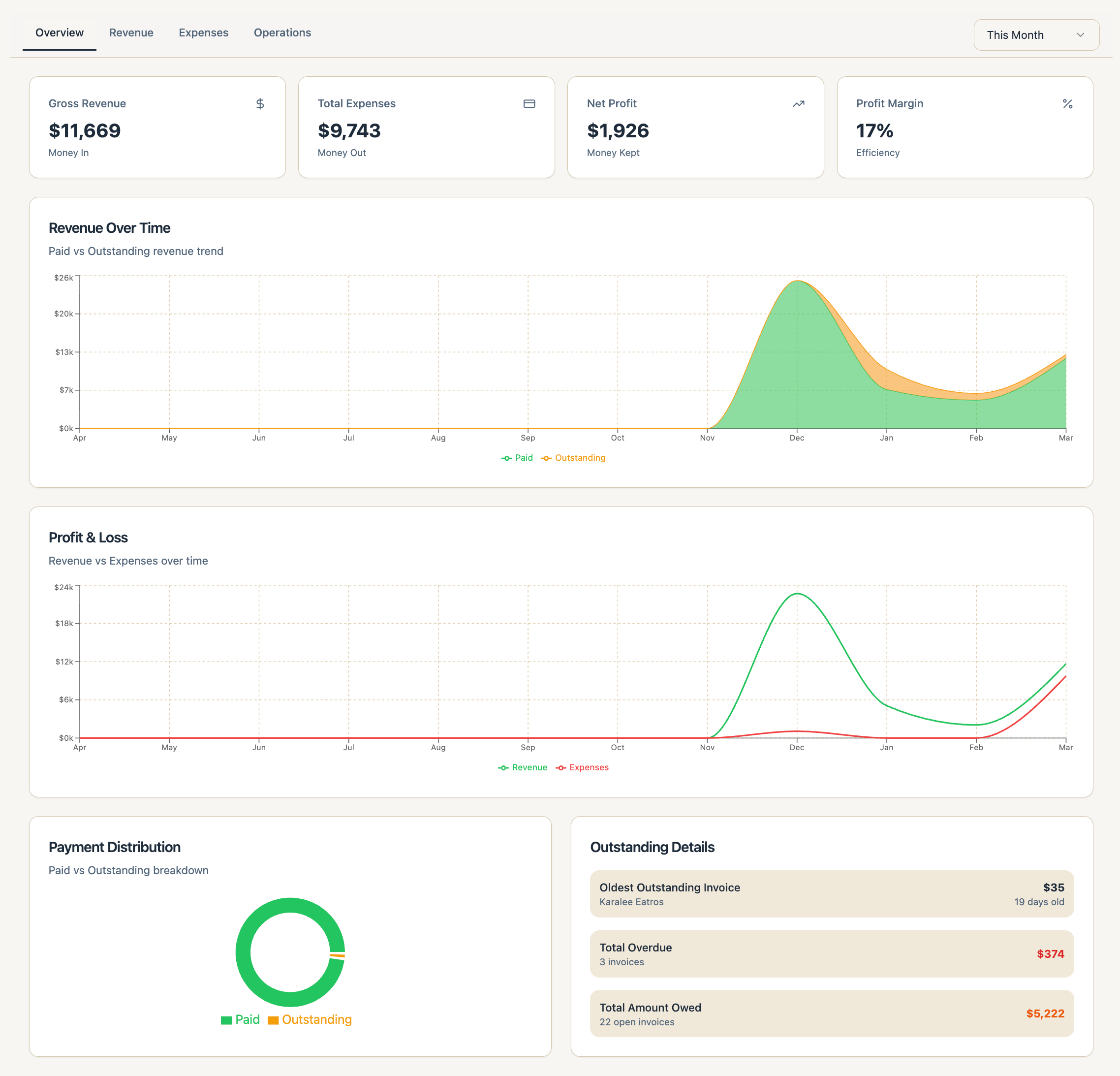
Is Your Horse Boarding Barn Actually Profitable?
Most horse boarding operations can tell you their monthly revenue without hesitating. Ask them their actual profit margin and the conversation goes quiet.
This isn't a criticism. It's a structural problem with how the industry operates. The tools most barn managers use were built to track horses, not businesses. They track feeding schedules, vaccination records, and stall assignments with precision. They have almost nothing useful to say about whether the operation is financially healthy.
The result is that most boarding barns are run on feel rather than on numbers. Things feel okay when the board checks come in. Things feel tight in January. Nobody actually knows whether the margin is 12% or 42%.
That gap matters a lot more than it seems.
If you want a fast way to see where you actually stand, our free barn profit calculator breaks down your real per-horse profit or loss in about two minutes.
Why "Staying Busy" Is Not the Same as Being Profitable
A barn at 90% occupancy sounds like a successful operation. It might be. It might also be barely breaking even after feed, labor, utilities, and maintenance costs are accounted for properly.
Occupancy is a revenue metric. It tells you how much potential income you're capturing. It says nothing about what's left after expenses.
The farms that run into financial trouble almost always have the same story in hindsight: they were generating strong revenue, they were consistently busy, and they had no clear picture of where the money was actually going. By the time the numbers became undeniable, the margin had been thin for months.
Running a boarding barn without a P&L is like training a horse without watching it move. You're working from instinct when you could be working from information.
What Actual Profitability Looks Like in Horse Boarding
Let's use a real example. A full-care boarding operation with 40 stalls charges $750 per month per stall. At 90% occupancy, that's 36 stalls generating $27,000 in monthly gross revenue.
That sounds solid. Now run the expenses.
Feed and hay for 36 horses at full care costs roughly $4,800 to $6,500 per month depending on your region and feed program. Labor, even with a lean team, runs $5,000 to $8,000. Utilities, farrier visits, vet supplies, maintenance, and insurance typically add another $3,500 to $6,000. You're now looking at $13,300 to $20,500 in monthly costs against $27,000 in revenue.
That's a net margin of somewhere between 24% and 51% before any debt service, equipment depreciation, or owner compensation.
The range is enormous. And most barn operators have no idea where they actually land within it.
The Three Numbers Every Barn Operator Should Know Cold
If you run a boarding facility and you don't know these three numbers today, calculating them is the highest-value thing you can do for your business this week.
Net margin. Total revenue minus total expenses, divided by total revenue. Expressed as a percentage. A healthy full-care boarding operation should target 35% to 50%. If you don't know your net margin, you don't know if your business is healthy.
Revenue per occupied stall. This isn't just your base boarding rate. It includes every add-on: training fees, blanketing, extra feedings, arena rental, any services attached to that stall. The average tells you a lot about where your real revenue is coming from.
Expense per occupied stall. Take your total monthly operating expenses and divide by the number of occupied stalls. This is the floor below which your boarding rate cannot go without losing money. Most barn operators have never calculated this number. It's the most important number in their business.
The Cash Flow Illusion
Here's a pattern that shows up constantly in boarding operations: the barn feels financially comfortable in the first two weeks of the month because that's when most board payments come in. By the third week, with feed bills due and labor costs accumulating, the picture shifts.
This is a cash flow problem, not a profitability problem, but the two are related. If your collection rate is low because some boarders pay late and others don't pay at all, your cash position is always lagging your actual revenue. You're profitable on paper and stressed about cash in practice.
The solution isn't to pressure boarders more aggressively. It's to have a clear picture of both your P&L and your collection performance. Those are two different views of the same business, and you need both.
We built Stables horse boarding software specifically because this visibility didn't exist anywhere. Read more about how horse management software has evolved and why the financial layer is the piece the industry has been missing.
How to Start Tracking This Today
You don't need software to start. You need a spreadsheet with three tabs: income, expenses, and a summary.
In the income tab, every revenue line item goes in by category. In the expenses tab, every cost goes in by category. The summary tab subtracts expenses from income.
Do this for the last three months. What you find will probably surprise you. Margins are almost always either better or worse than expected, rarely exactly what was assumed.
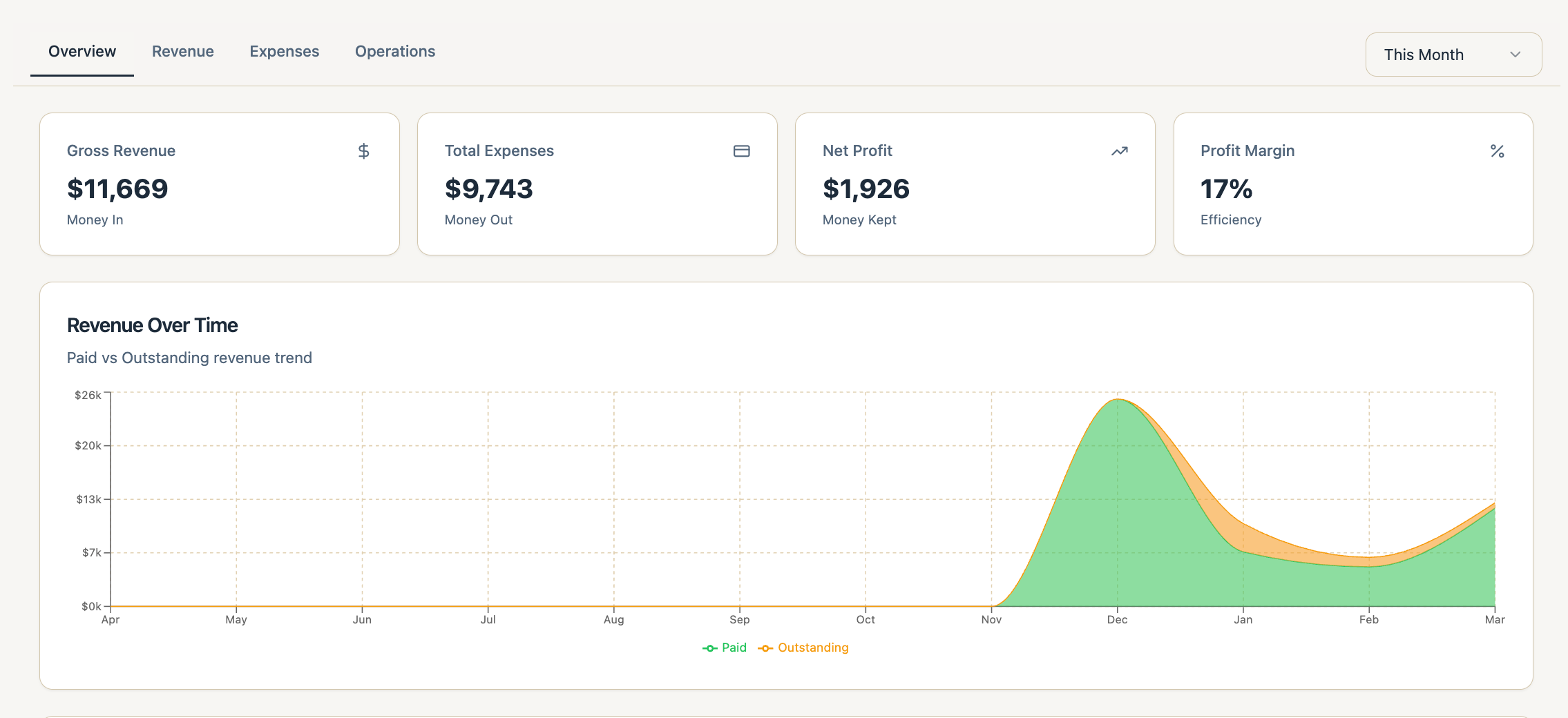
If you want this done automatically, with every board payment, failed charge, and expense logged in one place, that's exactly what Stables horse boarding software does. The Barn P&L populates in real time as money moves through the system.
Related Reading
- The Complete Guide to Building a Horse Boarding Barn P&L
- Common Horse Boarding Barn Billing Mistakes