Farrier and Vet Pass-Through Billing: How Boarding Barns Recoup Charges They Front for Owners
Billing boarders for farrier and vet charges gets messy fast when a barn pays the provider first and chases owners for reimbursement later. The right barn management software ties each charge to a horse and owner automatically, so pass-through costs land on the next invoice instead of falling through the cracks.
By The Stables Team
Can a Boarding Barn Legally Charge Owners for Farrier and Vet Bills It Fronts?
Billing boarders for farrier and vet charges is one of the most common questions boarding barn owners ask, especially early in the business, and in most cases the answer is yes: a barn can bill a horse owner for a farrier or vet bill it paid first, as long as the boarding contract authorizes it. This is generally treated as reimbursement for a service arranged on the owner's behalf, not the barn practicing veterinary medicine or extending unsecured credit. Rules vary by state, so what a barn can charge, how quickly, and what remedies it has for nonpayment, including a lien on the horse in some states, differ across the country. A barn without a signed agreement covering these charges is relying on goodwill, which usually breaks down the first time a bill gets large.
How Should a Boarding Contract Be Worded for Billing Boarders for Farrier and Vet Charges?
The contract should say plainly that the barn may arrange routine farrier visits and emergency veterinary care on the owner's behalf, that the owner authorizes the barn to pay those providers directly, and that the resulting charges will appear on the boarder's next invoice. Good language states the payment window, net 10 or net 15 is common, what happens on a missed payment, and whether the barn adds a coordination fee. Vague contracts that only mention costs "as needed" leave both sides guessing about timing and what counts as an emergency versus a routine visit the owner should have scheduled with an experienced farrier.
How Do You Track Which Farrier and Vet Charges Belong to Which Horse and Owner?
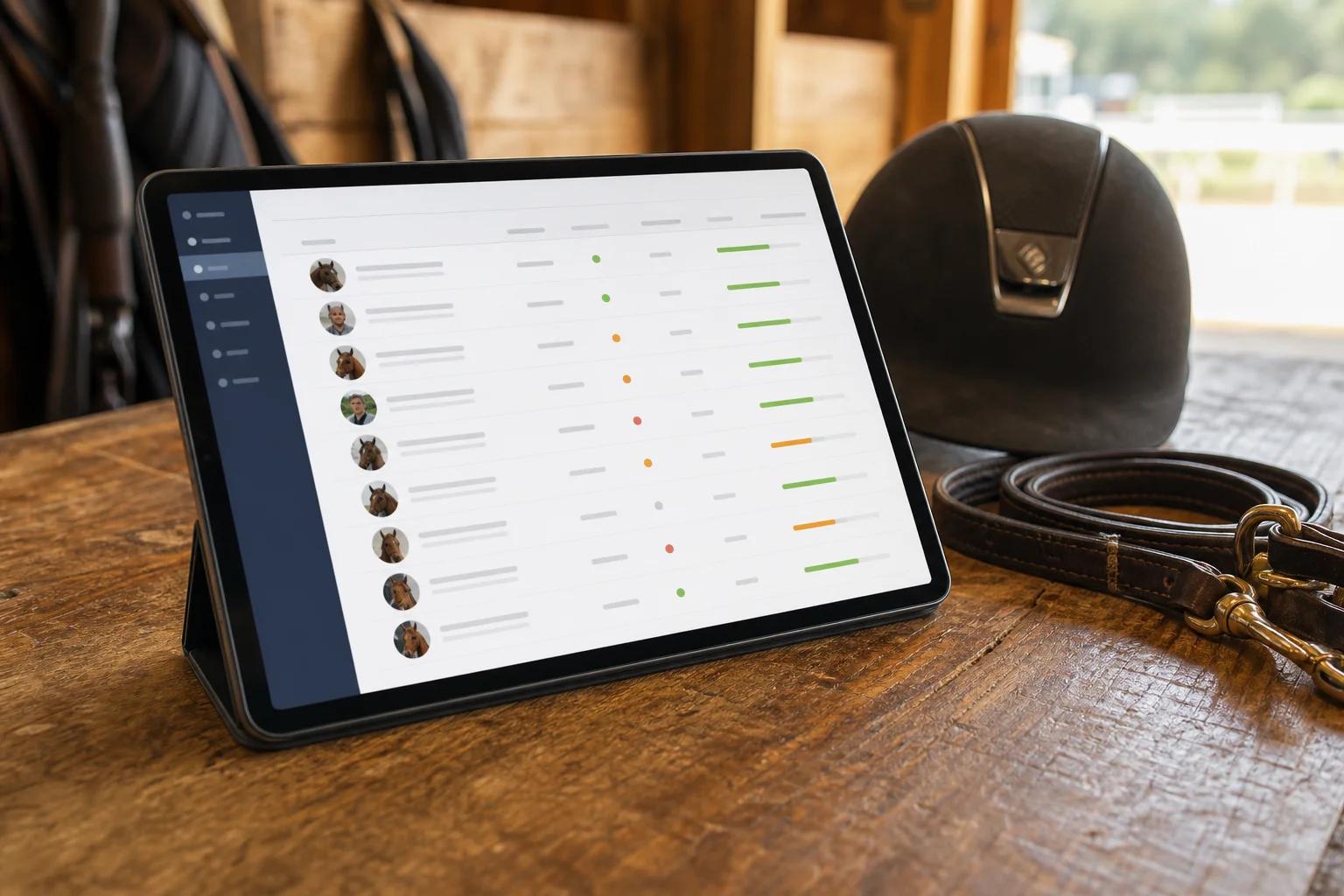
Every pass-through charge needs three things attached before it becomes an invoice line: the horse it was for, the owner responsible, and the date of service. Barns running this by hand usually keep a notebook or spreadsheet at the front desk and transcribe farrier and vet invoices into the boarder's file at the end of the month, a process that loses charges whenever a receipt gets set aside during a busy week. A facility dashboard that logs the visit at the point of care, tied to that horse's profile, removes the transcription step and the memory problem that causes revenue leakage, regardless of the invoice format farriers use. The same tracking problem shows up at breeding farms coordinating routine hoof care for several horses at once.
Should a Boarding Barn Add a Markup or Flat Coordination Fee on Top of Vet and Farrier Bills?
Many barns add a flat coordination fee, commonly in the $5 to $25 range per visit, rather than a percentage markup, because a flat fee is easier to disclose and easier for an owner to budget around. A percentage markup on a $400 emergency vet call can feel punitive even when the barn's time and liability for holding the horse were real. A coordination fee for arranging the visit, rather than marking up the medical service itself, is the cleaner position, since the barn isn't billing for work it didn't provide, only for scheduling, holding the horse, and fronting payment. Whatever the barn charges belongs in the contract, not introduced for the first time on an invoice.
What's the Best Way to Invoice Boarders for Farrier and Vet Charges Each Month?
The charges land best when they ride on the same invoice as recurring board billing instead of arriving as a separate bill later, because owners already expect one statement and a second, unexpected charge is what triggers disputes. Barns that connect care logs to billing avoid re-keying farrier and vet charges by hand: Stables features route a logged farrier or vet visit straight into the next boarder invoice, itemized by horse and date, so nothing gets missed between the visit and the bill. Itemizing each charge, rather than folding it into one lump line, gives horse owners the visibility to catch a billing mistake before it becomes an argument, and gives the barn a clean record if a charge is ever disputed later.
Handling Non-Payment and Emergency Care
What Should a Barn Do When an Owner Refuses to Pay a Pass-Through Vet or Farrier Bill?
Start with the contract language the owner already signed, and send a written notice citing the invoice, date of service, and provider before escalating. Most disputes resolve at that stage. If a bill stays unpaid past the contract terms, the barn's options, late fees, boarding termination, or in some states a stable lien, come from that same agreement, which is why the wording matters more than the collection call.
How Do You Handle Emergency Vet Costs When You Can't Reach the Owner First?
The contract should authorize the barn to approve emergency care up to a stated dollar threshold, or without a cap for anything the vet flags as life-threatening, when the owner can't be reached within a reasonable window. Documenting the attempts to reach the owner protects the barn if the bill is later disputed. This is also where a credit card on file matters most: an authorized emergency charge with no clear payment method behind it is the scenario most likely to turn into a long collections problem.
Can a Boarding Barn Withhold a Horse or End a Boarding Agreement Over Unpaid Vet Bills?
In many states a boarding facility can place a lien on a horse for unpaid board and related care costs, but the exact process, notice period, and sale procedure are set by state law and must be followed exactly or the barn risks liability. Ending a boarding agreement over nonpayment is more straightforward and should be spelled out as a defined step, giving the owner a set number of days to resolve the balance before the horse must be moved.
Owner-Choice Farriers and Coordination Pricing
What if the Owner Wants to Use Their Own Farrier Instead of the Barn's Regular One?
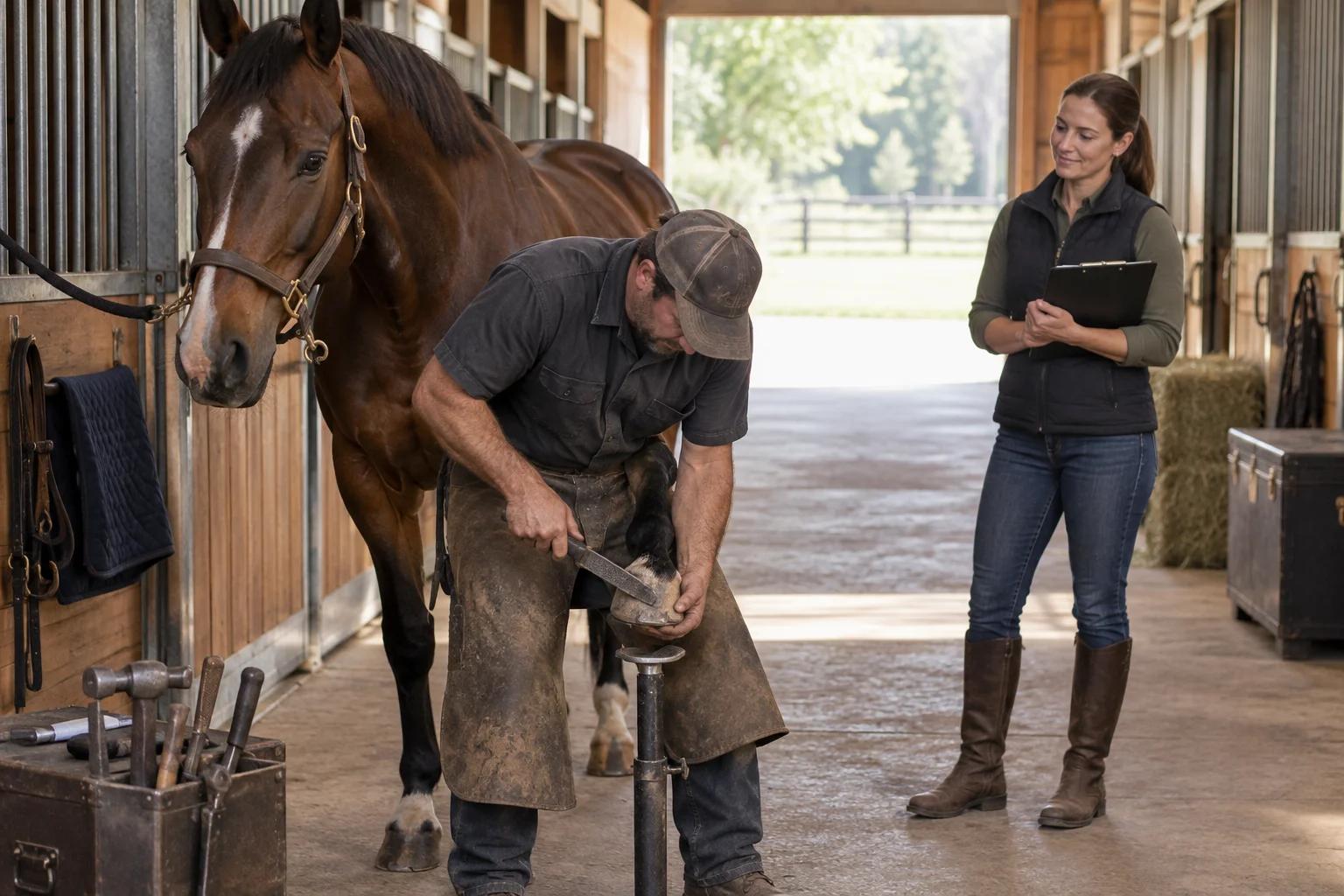
Most contracts allow it, and the barn's role shifts from fronting the bill to simply coordinating access: scheduling the visit, holding the horse, providing a safe area to work. Whether that still carries a coordination fee should be decided the same way as any other pass-through charge, in the contract, not case by case. Owners often choose their own farrier based on experience and reputation, wanting a good farrier whose knowledge of that horse hoof means catching a problem early. Bringing in a new farrier still means giving the barn enough notice to schedule around turnout and training sessions, since the physically demanding work farriers do on a routine visit takes real time to plan around.
How Much Should a Boarding Barn Charge to Coordinate Farrier and Vet Visits?
There's no single number, but barns coordinating routine visits, holding the horse, providing space, managing scheduling, commonly land in the $5 to $15 range per visit, with emergency or after-hours coordination priced higher. The fee should cover the barn's actual administrative work, not function as a profit center on medical care, and should be disclosed as a flat, predictable amount so horse owners can plan for it the same way they plan for board and other routine expenses tied to what each horse needs.
Frequently Asked Questions
Can a boarding barn legally bill owners for farrier and vet charges it paid first? In most states, yes, as long as the boarding contract clearly authorizes the barn to arrange and pay for farrier and vet visits on the owner's behalf and bill the cost back. This is treated as reimbursement, not the barn practicing veterinary medicine.
Is it legal to add a coordination or service fee on top of a vet or farrier bill? Generally yes, when the fee reflects the barn's administrative work, scheduling, holding the horse, fronting payment, rather than a markup on the medical service itself. Disclosing the amount in the contract, rather than introducing it on an invoice, is what keeps it defensible.
What happens if an owner's card on file is declined for an emergency vet bill? The barn should have a written follow-up process: a set number of days to update payment before late fees or collections steps begin. A declined card doesn't remove the barn's right to bill for the charge, it just means the barn needs a documented next step.
How soon after a farrier or vet visit should the charge appear on the owner's invoice? The same billing cycle is the standard most barns aim for, ideally the next monthly board invoice rather than a separate bill weeks later. Charges that sit unbilled for a month or more are the ones most likely to get disputed or forgotten.
Can a boarding barn refuse to let an owner's own farrier onto the property? A barn can set reasonable scheduling and safety requirements, insurance proof, advance notice, working hours, but an outright refusal needs to be addressed in the contract rather than decided in the moment. Most facilities allow an owner's chosen farrier with enough notice to coordinate around turnout.
See How Stables Connects Care to Billing
Chasing down farrier and vet receipts at the end of the month, or writing off a pass-through charge nobody remembered to invoice, is revenue a boarding barn already earned and shouldn't have to fight for. Run your own numbers with the barn profit calculator to see what missed pass-through charges are actually costing your facility each month.